
Capture the Onondaga County Current Owner Record
The current owner field surfaces through Image Mate, the county Property Search, and the local assessor responsible for the parcel. Copy the name exactly as displayed, keeping initials, entity suffixes, trust wording, and any fiduciary capacity intact. Note the situs separately from the mailing address, and record the municipality, tax map number, roll year, and capture time alongside it.
Owner-of-record checklist
Displayed owner: exact spelling
Parcel: local SBL and GIS TAX_ID
Place: situs and municipality
Mail: mailing address, labeled as such
Time: roll year and capture date
Proof check: newest deed reference
Use Image Mate as the Present-Roll Checkpoint
RPTS draws its current owner information from the town or City of Syracuse assessor. Property details come from that same source. Data can shift during the year. The final roll generally lands around July 1. So a current owner result is a dated administrative snapshot. It never guarantees title in real time. The official Image Mate entry presents its terms and the property-search link.
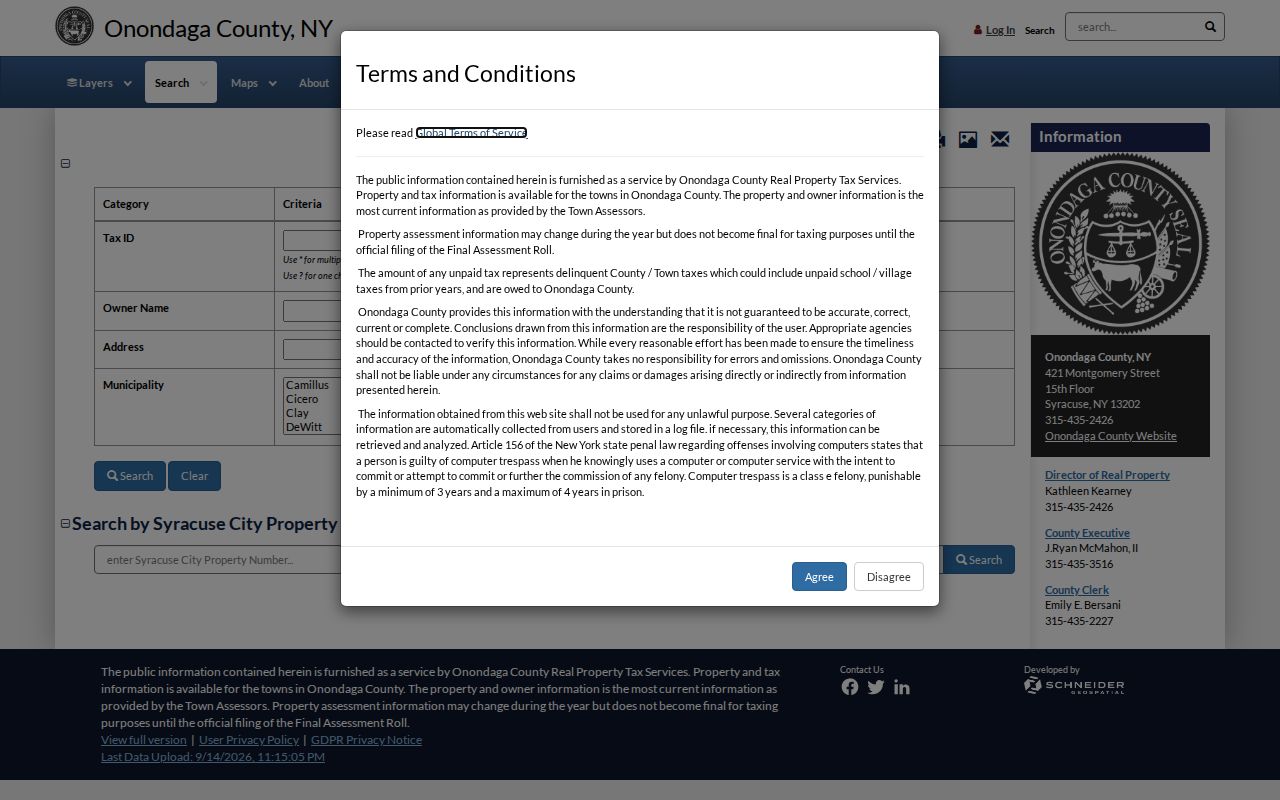
Keep the disclaimer and roll context with any saved owner result, since that context is what makes the record interpretable later.
Compare the Onondaga County Current Owner With the Latest Deed
Search the displayed owner as a grantee in Cott eSearch. Inspect the newest conveyance matching the parcel's legal description. Then run the same name as a grantor to catch a later transfer. Correction deeds, executor deeds, referee deeds, and quitclaims can all explain why a simple sale narrative falls apart.
If the deed is recent, report both dates plainly. Note whether the assessor still names the seller. The county publishes no fixed countywide lag between recording and roll updates. A statement such as "deed recorded on this date; final-roll owner captured on that date" is more accurate. It beats guessing an interval.
Handle Situs and Mailing Addresses Separately
The situs locates the parcel itself. The mailing address is where tax correspondence goes. It may belong to an owner, agent, trustee, company, or another destination entirely. Never treat a mismatch as evidence of occupancy or wrongdoing. Confirm the municipality and parcel number first. Then read the deed's grantee address only as a supporting identity clue.
ZIP maps are generalized. They carry no official USPS boundary weight. Where a mailing city conflicts with the parcel municipality, follow the assessment jurisdiction and the GIS municipal layer instead.
Run a Syracuse Current Owner Check
Syracuse runs its own assessment office, responsible for more than 41,000 properties, plus separate city tax, zoning, permit, and code channels. Start with city assessment or the linked county search. Confirm the SBL in GIS. Use the County Clerk for the deed. The city's zoning map and permit portal describe land use and work records, not ownership. The official Syracuse Assessment page provides roll and self-service links.
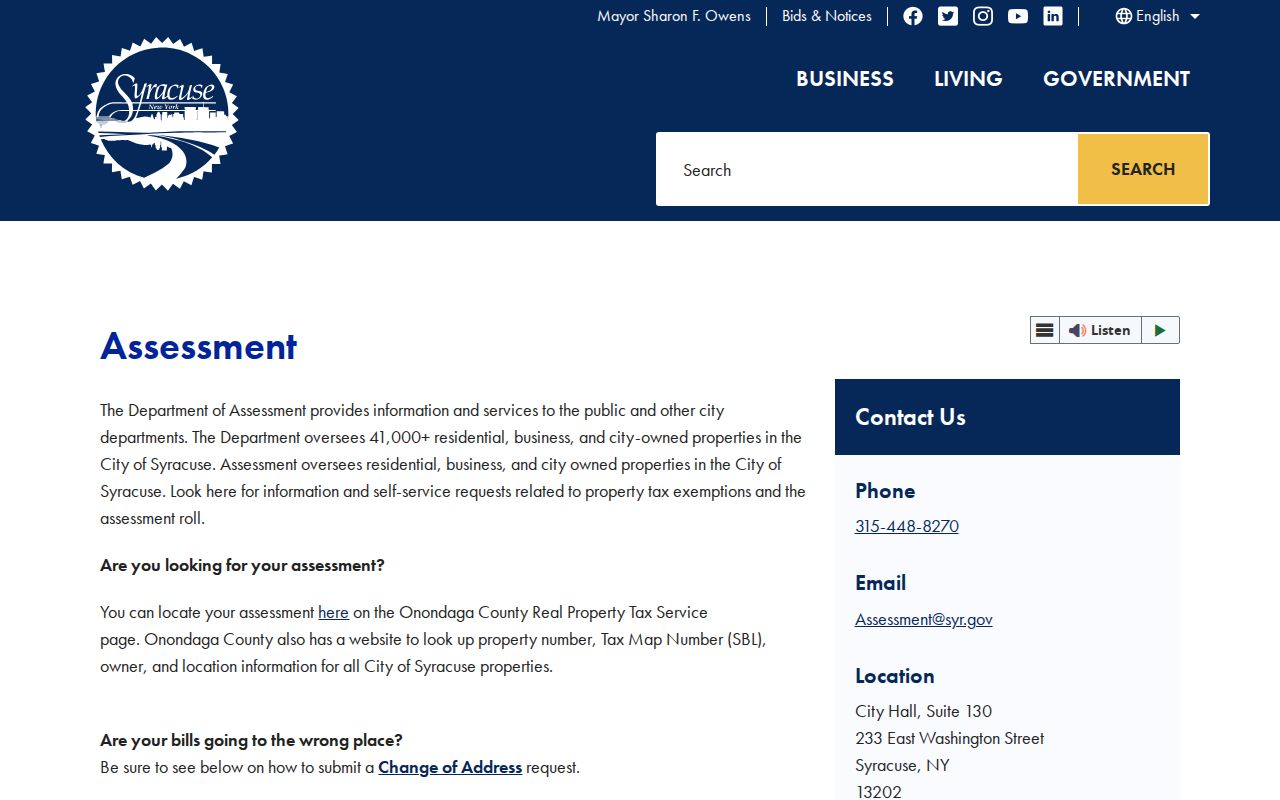
Whenever the owner field actually matters, cross-check the city record against the county deed.
Use PropertyCheck to Watch Owner-Name Recordings
The County Clerk offers a free PropertyCheck service that alerts on a registered name whenever a new document is recorded. Add every relevant personal, trust, and entity variant. An alert neither validates nor blocks a filing. Verify the instrument in the Clerk index, and call the published Clerk number if anything looks suspicious. The official PropertyCheck page offers sign-up and login.
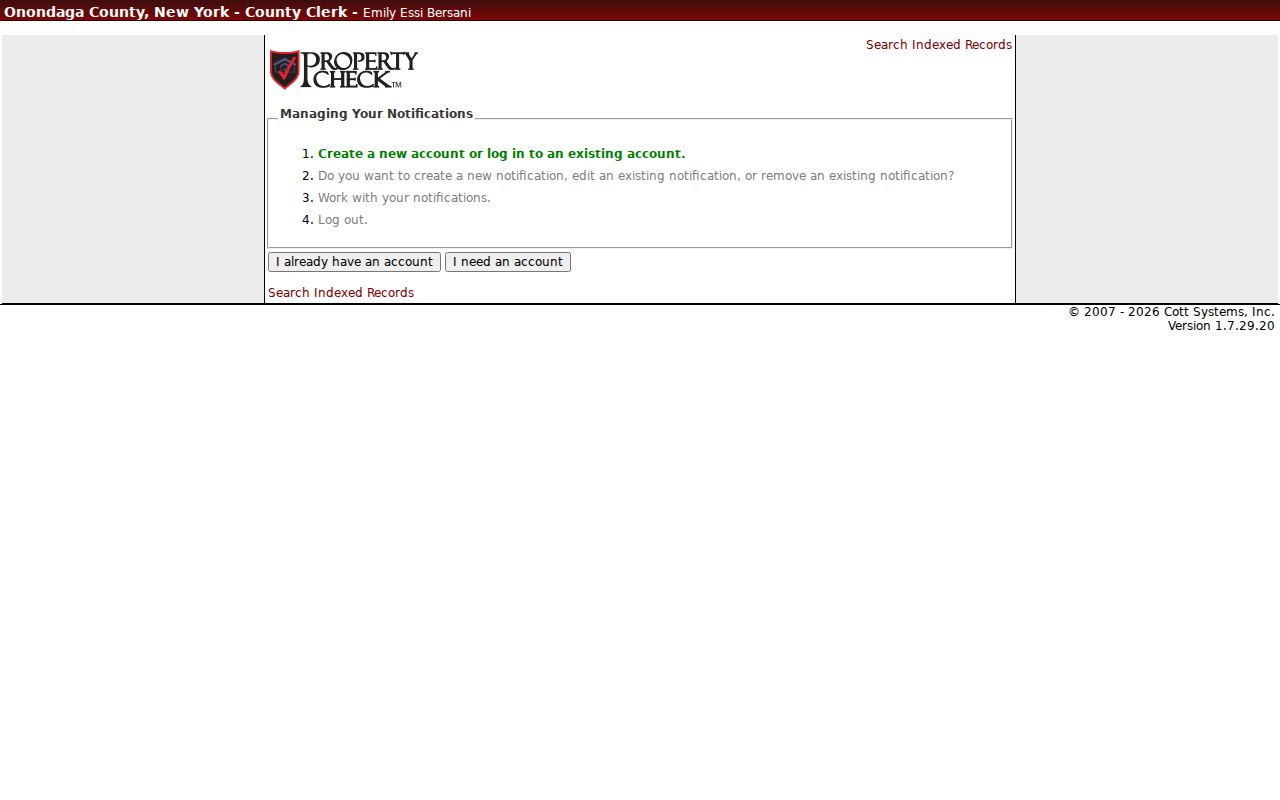
Monitoring complements the deed index but never replaces periodic review of the recorded instruments themselves.
Document an Onondaga County Owner Conclusion
State which source names the current owner, its roll year or recording date, the parcel identifier, and any conflict you see. Preserve the source URL and a timestamp. When assessment and deed disagree, do not silently pick one; explain the sequence and contact the local assessor or Clerk for a correction.
Privacy boundary. A current owner lookup supports property research and does not establish who lives at an address.
Identify an Entity Current Owner Without Guessing
When the assessment names an LLC or corporation, search the New York Department of State database for the exact entity name and status. The listing also shows filing history and a service address. Those fields separate similarly named entities and sharpen the Clerk query. The database does not identify every beneficial owner. It also cannot prove the entity still holds the parcel. Only the deed chain answers the recorded-title question.
For a trust, preserve the trustee name and capacity exactly as the deed states them. For an estate, tie the fiduciary to the Surrogate file. The Surrogate file pairs with the recorded executor or administrator deed. Never swap a formal grantee for an inferred individual. A mailing or business record may hint at an association, but that alone is not enough.
Respond to a Suspected Owner-Field Error
Gather the parcel number and the current display. Add the roll year and the newest deed reference. Note the specific correction you want, too. The local assessor handles assessment-field errors; the County Clerk handles indexing or recording questions. If the mismatch traces to a recent closing, state both dates. Let the custodians explain their update process. Keep copies of the request and response with your research log.
Use Roll History to Explain the Current Owner Display
Roll history settles most timing questions. Compare the parcel in current rolls against archived rolls from 2017 through 2023. One final roll may still list the seller, while the next names the buyer. That interval narrows the Clerk search considerably. The roll never gives the exact transfer date, though. So pull the deed, and record its execution and recording details.
Watch for splits, mergers, or a changed SBL. A simple year comparison can fail there. Use GIS TAX_ID data, filed subdivision maps, and legal descriptions. Together they prove both records describe the same land. Keep both parcel identifiers rather than forcing the old record into the new format.
Date the final roll note precisely. Then state plainly whether the owner of record comes from the tax roll, the deed, or both official sources.