
Answer Who Owns an Onondaga County Property With Three Records
The most reliable owner-finding method puts three records side by side. Start with the assessment result. Map the parcel. Read the newest conveyance. Run the address through the county Property Search or Image Mate and note the displayed owner plus the tax map number. Check that number in GIS-on-Web. Then take the owner's name to County Clerk Cott eSearch and read the most recent deed covering the same legal description.
| Step | Evidence | Question answered |
|---|---|---|
| Assessment | Owner display, situs, municipality, SBL, roll year | Who the local roll currently names |
| GIS | Parcel geometry, TAX_ID, nearby parcels | Whether the candidate matches the intended land |
| Deed | Grantor, grantee, recording data, legal description | What the latest recorded conveyance says |
Search the Onondaga County Owner Field Precisely
Owner-name search starts with the surname alone, then narrows by given or middle name. Go broad first. After that, test initials, punctuation, spacing, trusts, estate capacities, and entity suffixes. Copy the name exactly as the screen shows it. Treat the mailing address with care. It is where tax bills go, not proof anyone lives there. The official Property Search page lets you enter an owner, property address, mailing address, or tax-map number.
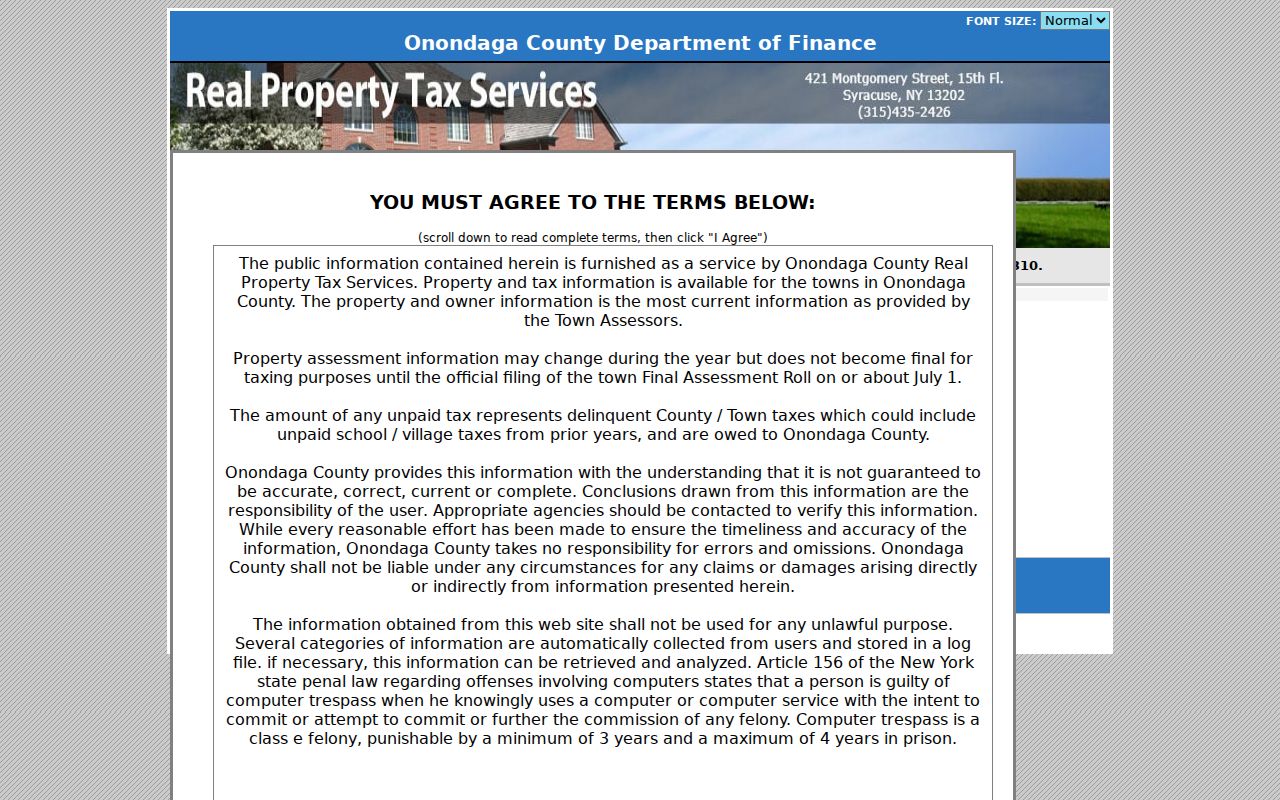
Picking the right entry field keeps a mailing result from masquerading as the parcel's physical location.
Confirm Who Owns the Property in the Clerk Index
The assessor's owner field is administrative and can lag behind a fresh recording. Search Cott with the owner as grantee. Read the newest deed. Then search that same person or entity as grantor to catch any later transfer. Along the way, note the instrument number, book and page, dates, document type, parties, and whether the legal description lines up. The official Cott eSearch portal offers guest index access.
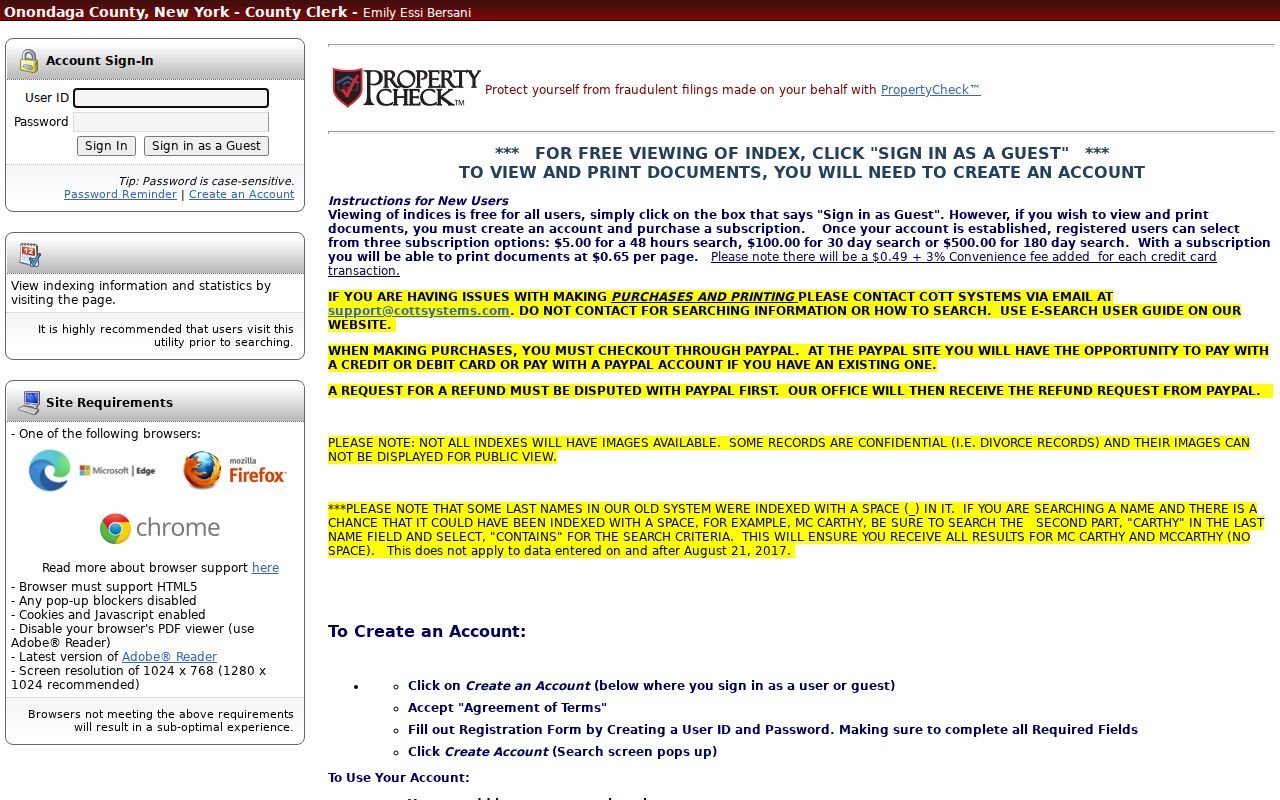
An index hit only points to a document; it never replaces reading the conveyance or any later liens.
Resolve LLC, Trust, and Estate Owners
Verify an LLC in the New York Department of State business database before relying on a deed nickname. Get the exact legal name, filing status, and service address, then return to the deed. DOS identity data is not title proof. For a trust, copy the trustee capacity and the precise grantee wording. For an estate, search Surrogate records for the decedent and fiduciary. Then confirm any executor or administrator deed in the Clerk index. A foreclosure transfer may pull in the Supreme Court docket, lis pendens, judgment, and referee deed. Later conveyances count too. Treat each as its own event. The person named in a lawsuit or mortgage is not automatically the current property owner.
Check Syracuse or the Town Before Calling an Office
Syracuse keeps its own city assessment channel, and nineteen towns maintain local assessment data. Trust the municipality shown in the parcel result. Do not rely on a ZIP code. The county's ZIP map is approximate. It can cross county lines. A Syracuse mailing label does not settle municipal jurisdiction for every related record. Inside the city, weigh city assessment, tax, zoning, permit, and code resources against county deeds and GIS. Outside it, contact the relevant town assessor or building office. The County Clerk remains the deed custodian for both.
Test the Candidate Owner Against the Parcel Map
GIS-on-Web accepts an owner, address, Parcel ID, or municipality. Use it to test whether the candidate parcel sits on the intended street among the expected neighbors. Save the 26-character TAX_ID when it appears. Never settle a legal boundary with approximate geometry. The official GIS-on-Web map presents the county parcel layer.
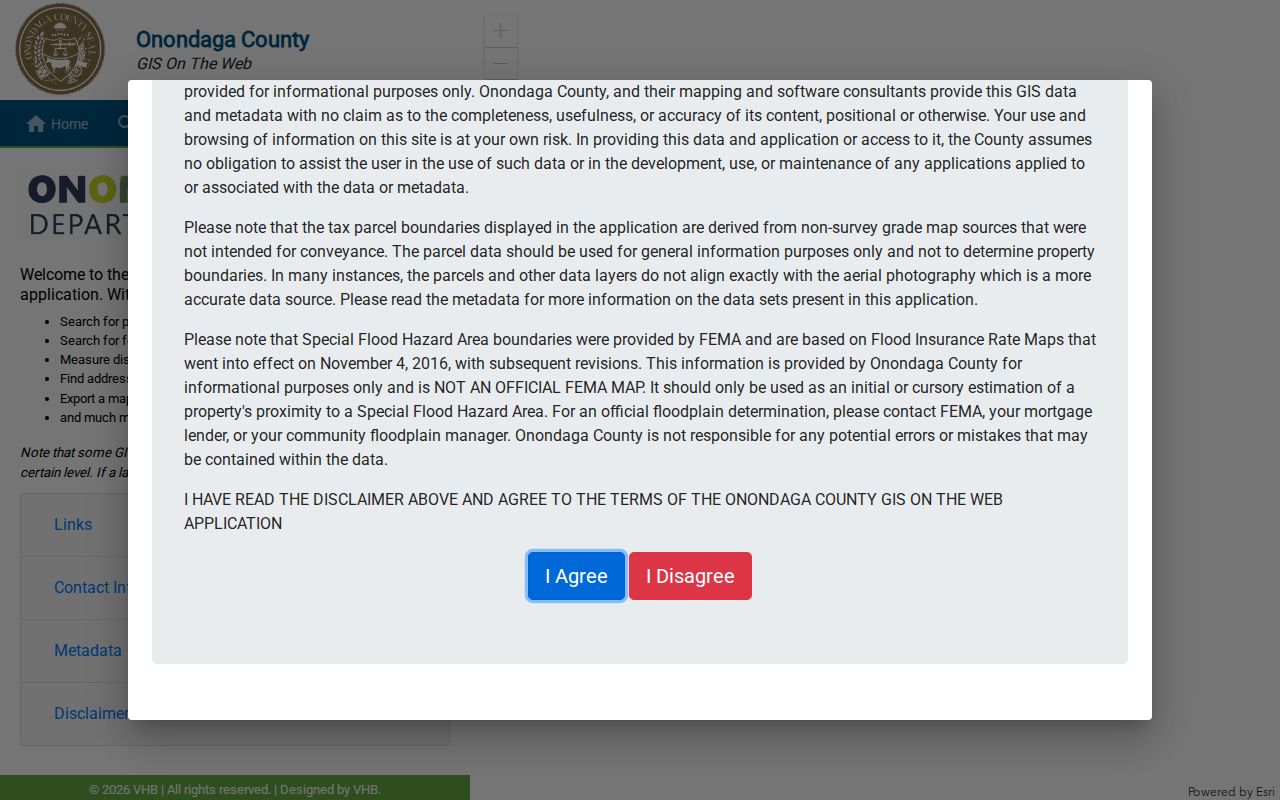
The map confirms geographic identity, while the assessor and deed provide the ownership evidence.
Record Currentness Before Naming a Property Owner
Write down the assessment roll year before naming anyone as owner. Note the assessor capture date if provided. Add the GIS metadata date, the deed recording date, and your search timestamp. The final roll generally appears around July 1. But the county publishes no fixed number of days for a new deed to reach every local owner field. Report the dates you observed rather than guessing at a lag.
Ownership limit. Public records name an owner of record, not necessarily an occupant, beneficial owner, or every unrecorded claimant.
Protect Privacy During an Owner Search
New York address-confidentiality programs and protected records exist to shield location information. Never try to rebuild a substitute address. Never combine property data with private identifiers. Keep the effort focused on parcel, assessment, deed, tax, and lawful due-diligence questions. For a transaction, estate dispute, or title conflict, get professional advice. Never treat a web search as a ruling.
Use Historic and Probate Clues Without Overstating Them
A newest deed naming a decedent, estate, executor, or administrator points to the Surrogate file. That file can identify the fiduciary and the proceeding. Library obituaries, cemetery records, directories, and WPA indexes help confirm spelling. They also confirm residence or a death date. Then return to the Clerk and locate the recorded estate conveyance. Probate context alone does not move the parcel on the public deed record. The same caution covers a former address or an adjoining-owner clue. Historic atlases and directories can bridge identities. Ownership should still be stated from the instrument. The legal description backs it up. That discipline keeps a difficult owner search tied to land evidence rather than personal guesswork.
Correct an Owner Record at the Right Office
Route an assessment owner or mailing-field question to the responsible town or Syracuse assessor. Include the parcel number and deed reference. An indexing issue goes to the County Clerk with the instrument number. GIS shape and attribute questions belong with county GIS. A title conflict may call for a title professional or an attorney, since ownership disputes reach beyond what any records office can settle. Keeping these routes separate keeps one office's answer from being misapplied to another record.
Distinguish Ownership From a Mortgage or Lien
A mortgage is not ownership. In Onondaga County property records, it only secures a lender's interest in the parcel. Later documents adjust that interest without moving title. An assignment passes the security interest to another lender. A discharge or release clears it. Liens, judgments, and lis pendens muddy title research too, but none of them transfers ownership.
Foreclosure changes the picture. When one follows, line up the mortgage, any assignments, the court action, and the judgment. Then add the sale, the referee deed, and later deeds by date and reference within the deed records. The plaintiff, the referee, and the auction bidder are not the owner of record. Their part in the case does not transfer title. Only a completed recorded conveyance in the deed chain supports calling someone the owner.
Keep the parcel number beside every owner conclusion. That way the name stays tied to the land record in the property records and cannot drift from the parcel it belongs to.