
Separate the Four Onondaga County Property Tax Records
Four records, four jobs. The local assessor sets the value. RPTS publishes the rolls and county resources, while the collecting office handles the bill during its window, and the County Clerk records deeds that may explain an ownership change behind a new tax bill. Syracuse runs its own assessment and finance offices. County, town, village, and school tax calendars in Onondaga County never follow one schedule.
| Record | What it shows | Where to start |
|---|---|---|
| Assessment roll | Owner display, assessed and taxable assessed value, exemptions | Local assessor and RPTS roll links |
| Current tax bill | Levy, installments, payments, balance | Collector for that municipality and tax period |
| Delinquent tax account | Unpaid amount, interest, enforcement stage | RPTS or Syracuse finance route |
| Recorded conveyance | Transfer parties, date, consideration clues | County Clerk Cott eSearch |
The Local Assessor Sets the Onondaga County Assessment
Onondaga County has nineteen towns plus the City of Syracuse. No county assessor values every parcel. Each town assessor does that work. RPTS notes that current owner and property information comes from the local assessor. Search the parcel first. Save the municipality and tax map number, then bring corrections or valuation questions to the linked local office. The official RPTS property tax page presents Image Mate with its current-owner and final-roll warning.
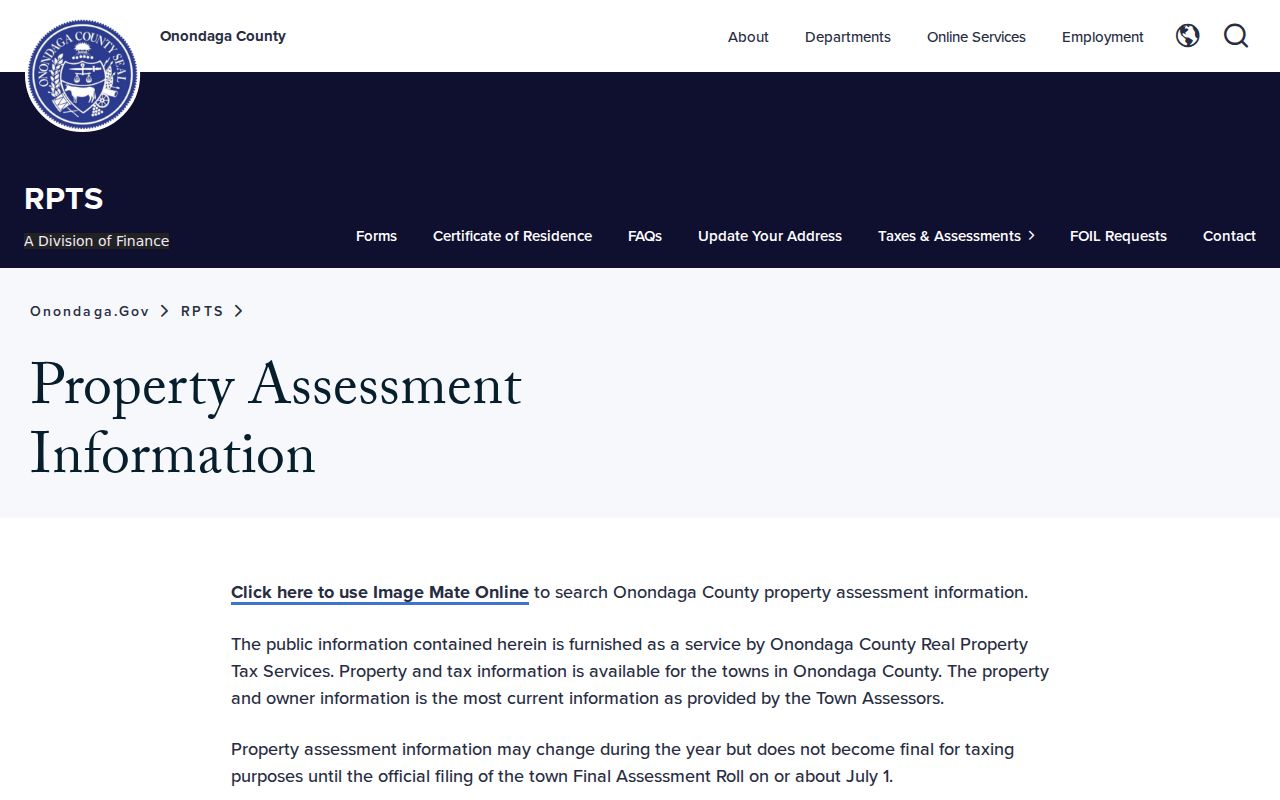
The warning matters when a deed was recorded after the assessment data was captured.
Compare Current and Archived Onondaga County Rolls
The current roll pages link 2026, 2025, and 2024. The archive reaches back to 2017. Compare one parcel across years by tax map number, not by owner name alone, because a tentative roll, a final roll, and a live parcel display capture different points in the annual process. Note the roll type and year. The official assessment-roll page lists the current links.
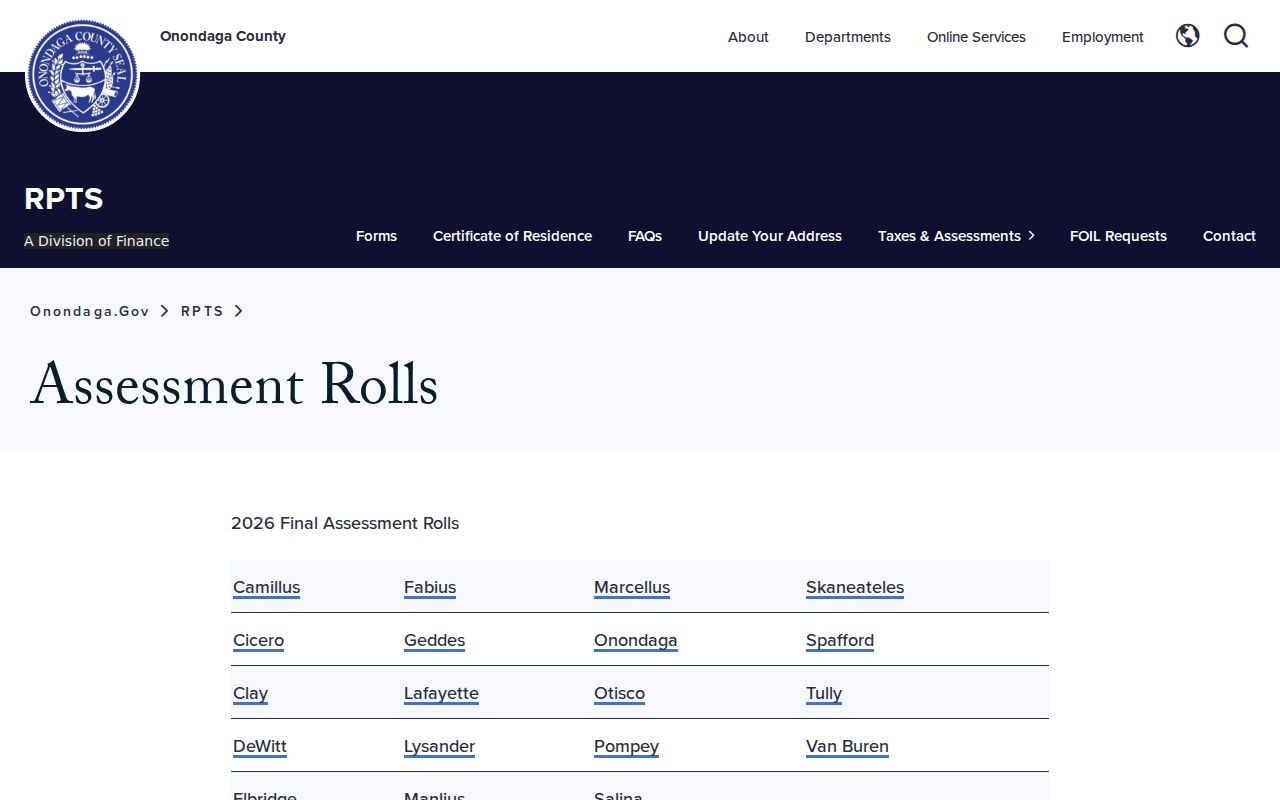
Old rolls answer chronology questions. The county's archived-roll page shows when an owner field or public value first entered the annual record, covering 2023 through 2017.
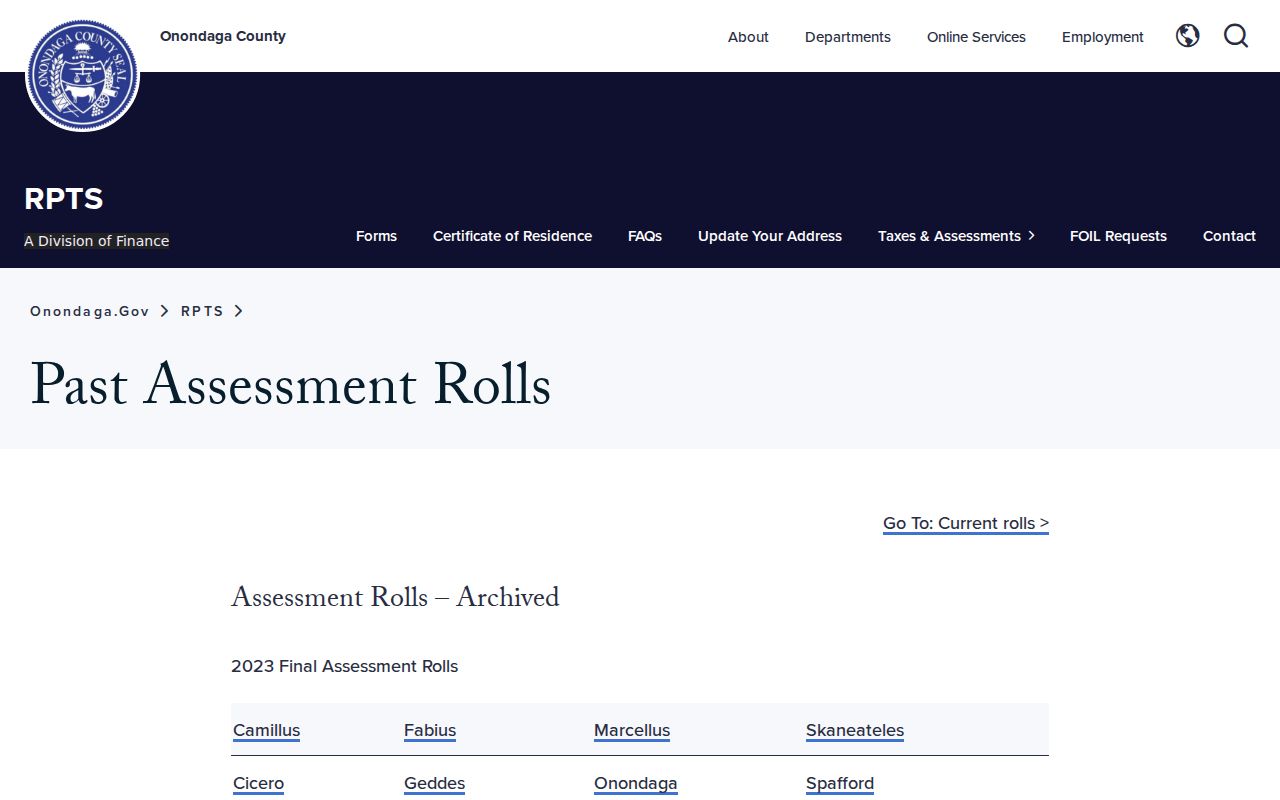
Compare a current bill against an earlier tax roll year in the archive.
Read Assessed, Taxable, and Full Value Carefully
Assessed value is the local roll figure. Taxable assessed value comes after exemptions. Subtract any applicable exemption first. A full-value or market estimate may lean on an equalization relationship to compare municipalities, though an equalization rate still describes aggregate assessment conditions and not a parcel appraisal.
The deed's sale consideration is separate. Family transfers, estate transfers, and partial-interest deeds can all distort it. Use the roll for the assessment. Use the bill for the levy and the deed for the transfer. None is a guaranteed sale price.
Match the Tax Type to the Collection Month
County, town, village, city, and school taxes use different collectors and payment windows. January through March is the county and town collection period. April is when delinquent handling changes. Village and school taxes get their own months. Confirm the live bill and collector before paying. A familiar portal may show a prior period rather than the account now due.
Outside Syracuse, RPTS allows partial payments with a $200 minimum. It also explains how interest and unpaid balances are handled. Syracuse bills through its own finance route. Never mail cash. Always confirm the official domain and telephone number before acting on a payment request.
Understand Delinquency and the 90-Day Warning
A tax-lien warning is not a foreclosure judgment. Identify the parcel, tax years, amount, deadline, and issuing office. Then inspect any related Supreme Court action and later Clerk filings, since a lis pendens, judgment, referee deed, and enforcement notice are distinct records. The difference matters. The official sample 90-day warning page shows the county notice format and its tax-lien context.
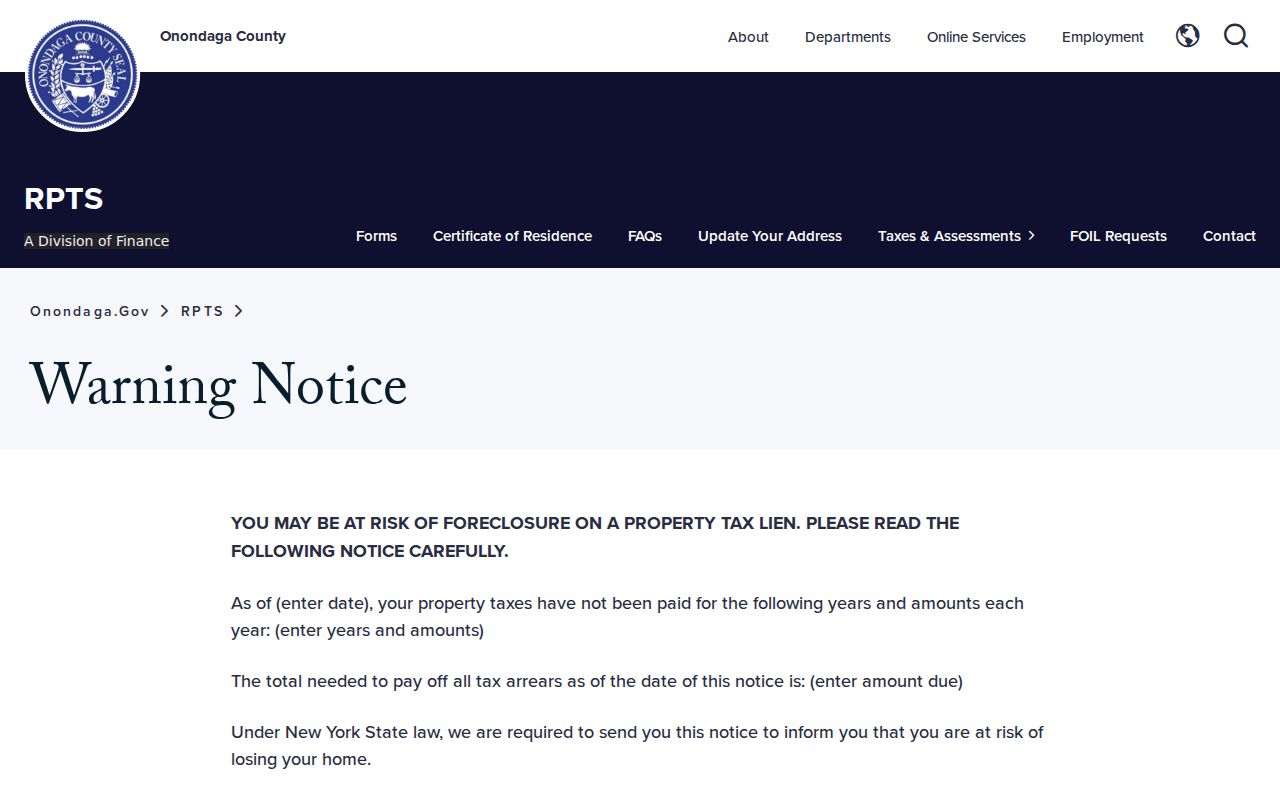
Study the sample format before any court docket search.
Use the Correct Onondaga County Grievance Route
Grievance starts with the assessor who placed the parcel on the roll. New York's RP-524 complaint form supplies the formal paperwork. The local Board of Assessment Review supplies the formal route. Syracuse follows a city timetable of its own. Town grievance dates differ. Old dates mislead, so verify the current filing window directly. The official Syracuse Board of Assessment Review page shows RP-524 and filing instructions.
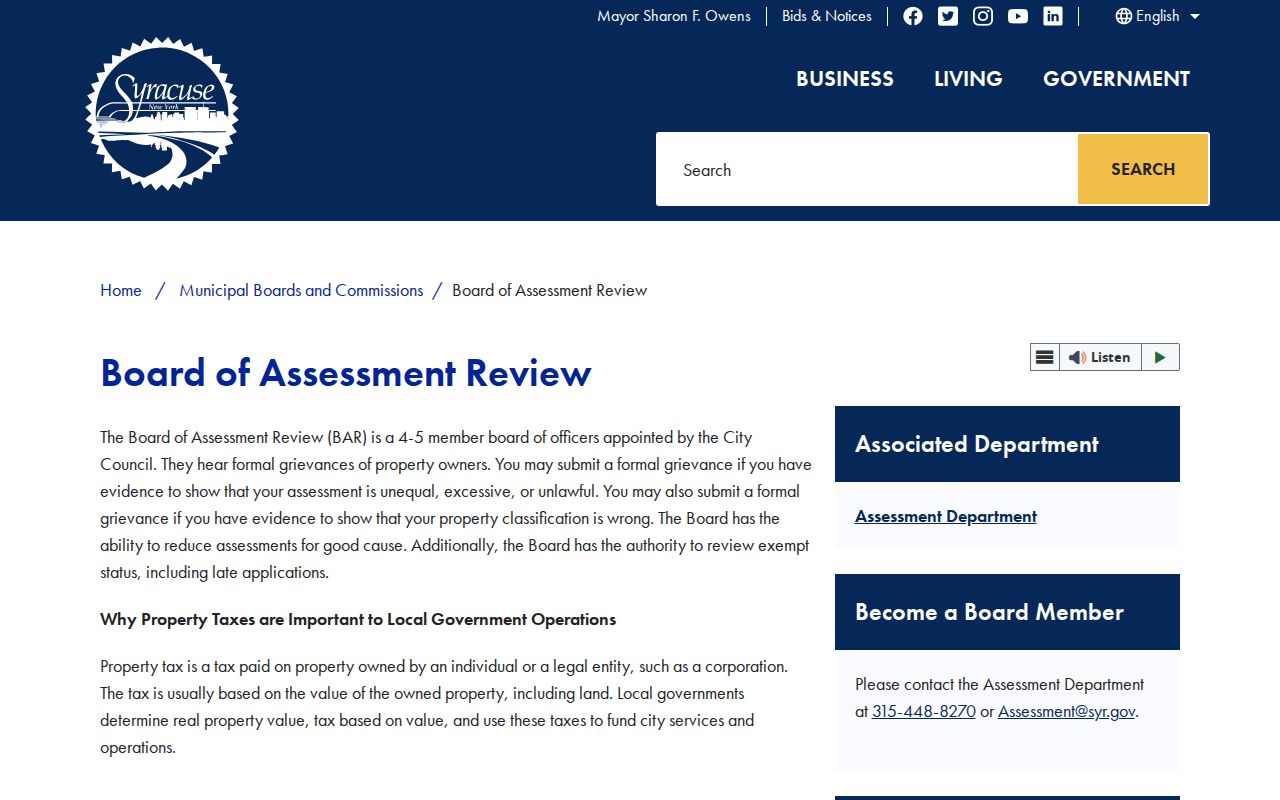
A complete appeal names the parcel and its valuation evidence. Follow the current local delivery and signature rules.
Read Auction Information as Time-Sensitive Tax Data
RPTS lists a 2026 online tax auction for October 6 through October 8, with registration, down-payment, and delinquent-tax eligibility rules. The details are event-specific. A listing is not a closed sale. Confirm the auction page before relying on any figure. The official county auction page displays the stated requirements and balance-deadline terms.
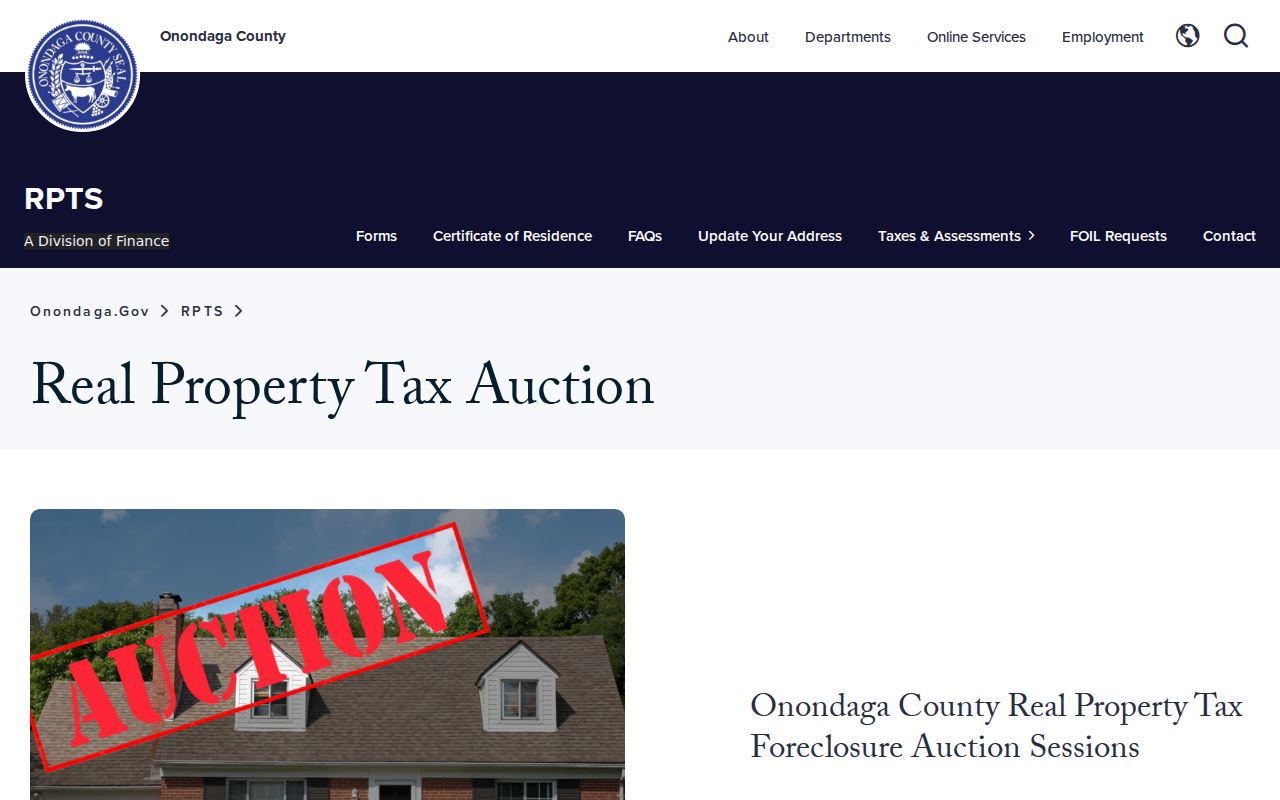
After the auction, the County Clerk confirms any conveyance.
Preserve a Tax Research Record
Keep a file for every parcel you research. Save the parcel number, municipality, roll year, tax type, collector, bill period, payment status date, exemptions, and any links used. Check the owner field against the newest deed. When timing matters, that comparison is the one that settles it, so contact the custodian for a correction rather than editing one system's result into another.
Currentness matters. A saved tax screen is evidence of what the portal displayed on that date, not a promise about a later balance or title.
Reconcile a Tax Bill With a Recent Transfer
Bills often lag behind recorded deeds. A bill can still show an earlier owner. It can also carry an old mailing instruction even after the deed is filed. Match the parcel number and tax period to the assessment roll and the latest deed. Then ask the collector or assessor about a correction. A name mismatch alone is no reason to redirect or withhold payment. The parcel obligation, the collection deadline, and the recorded ownership each need separate verification.
Estate sales, foreclosures, and auctions add a wrinkle. Save the court or sale context. Still, wait for the recorded conveyance before describing the ownership result. A bidder list, judgment, or scheduled auction does not by itself establish the final grantee.
Question an Onondaga County Tax Record at the Right Level
Match each issue to the right office. Assessed value, taxable value, exemptions, owner display, and roll corrections belong with the local assessor. Bills, payment posting, interest, and current balances belong with the collector. RPTS handles county tax resources, maps, and delinquent procedures. Ownership questions go to the County Clerk, which holds the deed that changed hands. Bring the tax map number, municipality, tax period, and a copy of the record, so each office can address the issue it actually controls.